

It happens every year around late July and August. The school supply lists land in your inbox and a subtle wave of panic sets in. You look at the refrigerator, where the enthusiastic “Summer Reading Tracker” you printed out in June has been completely blank for weeks.
If your child has spent the last two months avoiding books, you’re not alone. The good news is there’s still plenty of time to rebuild their reading habit and build momentum for the months ahead.
According to decades of research synthesized by the Brookings Institution, children can lose 25% to 30% of their school-year learning over the summer months. This phenomenon, known as the “summer slide” or “summer slump,” acts like a leak in an educational bucket. For reluctant readers, struggling learners, or children with neurodivergent learning profiles like dyslexia, this drop-off can feel even more devastating, turning the first month of the new school year into an uphill battle.
Fortunately, researchers and literacy experts agree: you don’t need a grueling, multi-hour study schedule to stop the slide. A few intentional, data-backed resets that fit directly into your families day-to-day can completely change the trajectory of your child’s upcoming school year.
Stressed About Back-to-School Learning Loss?
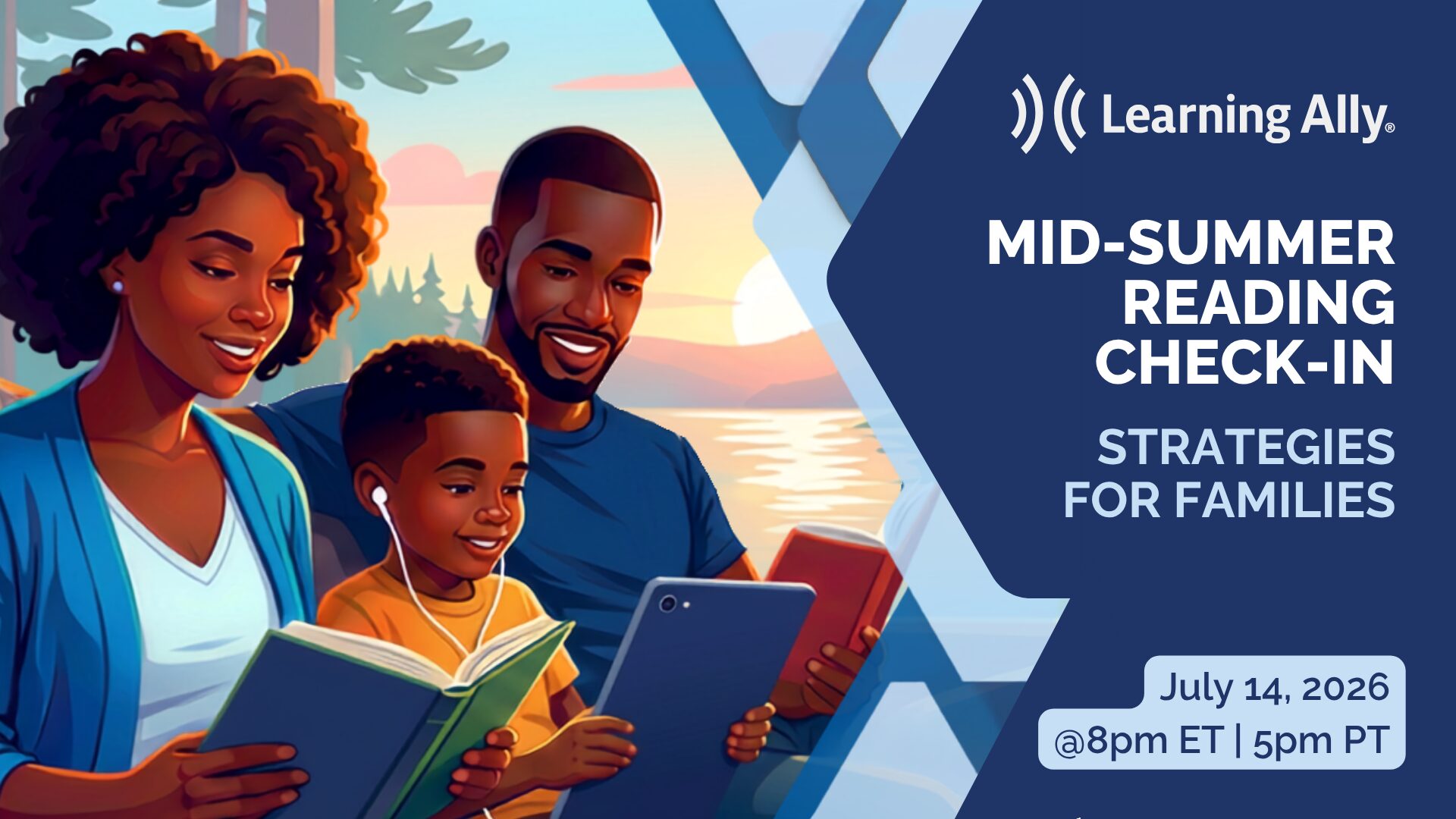
You don’t have to build a turnaround plan alone. Grab a coffee and watch our free, 45-minute Mid-Summer Reading Check-In Webinar On-Demand. Learn the behavioral science behind motivating a resistant reader, get practical tools to handle mandatory school booklists without a fight, and unlock free downloadable reading roadmaps.
👉 Claim Your Back-to-School Checklist
1. Keep Students Connected to Grade-Level Reading
One of the biggest challenges for struggling readers isn’t a lack of motivation—it’s a lack of access.
When reading feels difficult, students often avoid books altogether or choose texts well below their grade level. While books at an independent reading level have an important place, students also benefit from continuing to engage with grade-level stories and ideas throughout the summer. Staying connected to rich vocabulary, complex language, and age-appropriate topics helps prepare them for the expectations they’ll encounter when school begins.
For students with dyslexia and other reading differences, accessible formats can make all the difference. Human-read audiobooks paired with highlighted text allow students to experience the same books as their peers while reducing the frustration that can come with decoding every word. This immersive reading experience helps students focus on comprehension, vocabulary, and building background knowledge—skills that support success across every subject.
Instead of worrying about how many books your child finishes, focus on helping them stay engaged with meaningful, grade-level reading experiences in formats that allow them to succeed.
📚 Summer Reading Lists: Elementary | Middle | High
2. Remember: Every Format Counts
If your child shuts down when handed a traditional, text-heavy chapter book, stop fighting that specific battle.
Researchers at the Notre Dame Center for Literacy Education emphasize that reading volume and time spent interacting with language are the real predictors of growth, not the physical format of the media.
Graphic novels, ebooks, and human-read audiobooks all count toward your child’s summer literacy totals. Audiobooks are a particularly game-changing tool for struggling decoders. They allow a child to engage with sophisticated, grade-level vocabulary and complex plots (maintaining their cognitive growth) without getting tripped up by the frustration of decoding text on a page.
3. Apply the 5-Minute Rule to Build a Routine
A study of 350 elementary students published by researcher Indah Nurmahanani found that children who build a daily reading habit of 5 or more days a week come out significantly ahead in reading comprehension and fluency. Crucially, the data showed that establishing this daily habit early (in grades 1–3) created a massive protective effect by the time kids reached upper elementary school.
But how do you build a daily habit when your child resists? You start small.
The Harvard Graduate School of Education notes that avoiding summer learning melt is entirely about building a sustainable routine, not forcing high-volume milestones on day one. If a 30-minute reading block causes a household argument, drop it. Give yourself permission to try a 5-to-10-minute micro-habit.
A friction-free 5 minutes of reading completed every day right after breakfast or right before bed builds the psychological identity of “being a reader.” Once the routine exists without conflict, scaling it up to 10 or 15 minutes becomes simple.
4. Use Path Agency to Tackle Mandatory School Lists
By late summer, required summer reading lists become a primary source of household tension. Your middle schooler has to read a classic like The Outsiders, but they would rather do literally anything else.
When choice is taken away, motivation plummets. Behavioral scientist Daniel Pink notes that autonomy (voice and choice) is one of the pillars of human motivation. When schools dictate what a child must read, they strip away that autonomy.
To bypass this roadblock, give your child control over the path, even if they don’t own the destination. Sit down together and co-create a “survival plan.”
Let them pick the time of day they tackle the required reading.
Use the sandwich technique: Agree to 10 minutes of the mandatory school book, immediately followed by 10 minutes of a high-interest book they actually choose (like a comic book or a sports biography).
Bring them into the tracking process. Don’t log their minutes for them; let them take the driver’s seat by coloring in their own progress maps or calendars. Turning it into a visual representation of progress taps into a sense of mastery.
5. Prioritize Active Comprehension Over Blank Staring
Preventing learning loss isn’t just about eyes passing over text; it’s about making meaning. If a child reads for 15 minutes but forgets the plot the moment the book closes, the cognitive benefit drops.
You can spark active comprehension with zero-cost, creative check-ins that feel like play rather than an exam:
For Elementary Learners: Ask them to draw an alternate cover for the book or make up a quick “spin-off” scene where their favorite character meets a different superhero.
For Older Kids: Capitalize on current trends. Have them sketch out a custom sticker pack design for a water bottle, where each sticker represents a theme, turning point, or hidden symbol in the story.
For the Whole Family: Pick a book that has a cinematic adaptation. Read it throughout the week, and celebrate the finish line by hosting a family book-to-movie comparison night with popcorn.
Reset Your Back-to-School Trajectory Today
The remaining weeks of summer are the perfect sandbox to transition your household back into a structured rhythm. Don’t aim for flawless perfection; prepare for tough days, acknowledge the small wins, and celebrate the fact that even five minutes of shared reading today protects your child’s bright tomorrow.
Access the On-Demand Webinar & Back-To-School Toolkit
There’s still time! Help your child start the new school year prepped for success.
- Stream our expert-led “Mid-Summer Check-In” webinar instantly to get on-demand access to the 45-minute strategy video
- Print Summer Reading Road Maps & Goal Trackers
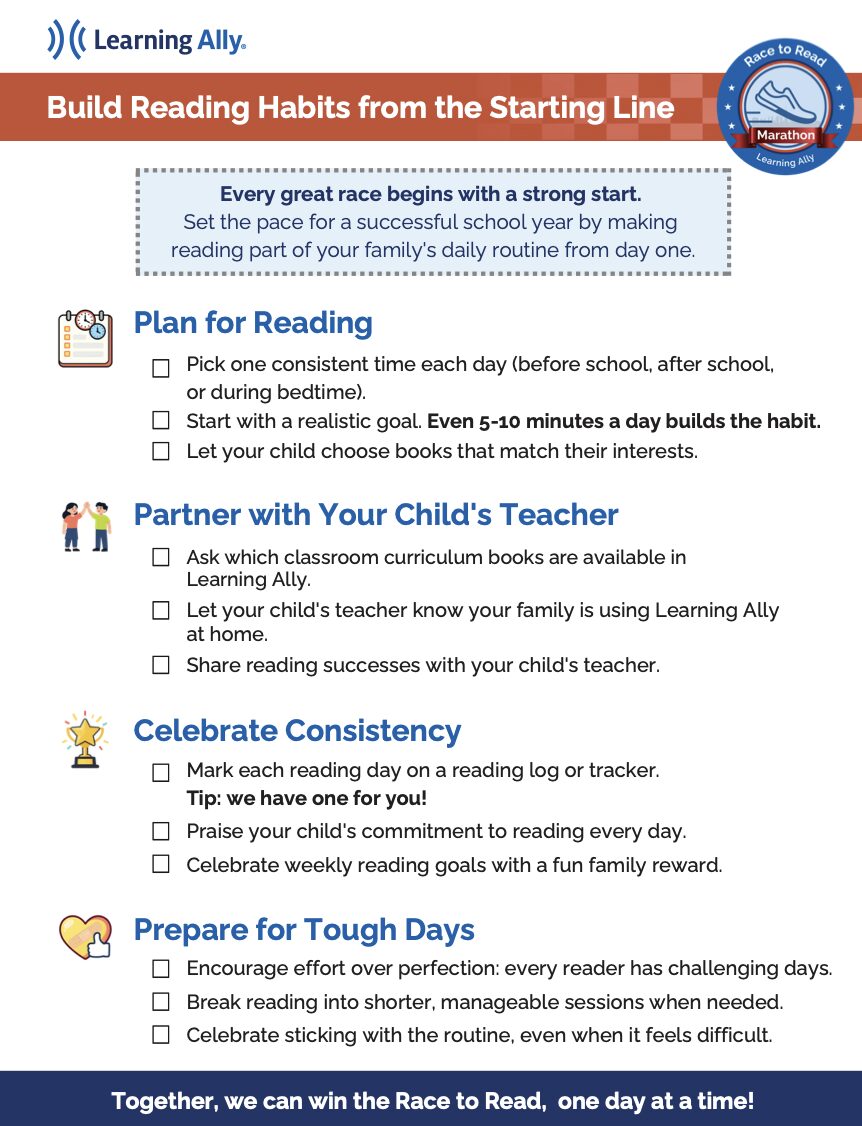
- Download the “Building Reading Habits from the Starting Line” Guide
- Become a Learning Ally Member