
Summer break gives K–12 students time to rest, recharge, and explore new interests, but it can also lead to a decline in academic skills known as the “summer slide” or summer learning loss. For students with dyslexia and other learning differences, the effects can be even more significant if reading routines and access to learning supports disappear during the summer months.
The important thing for families to know is that the summer slide is common, predictable, and preventable. Children do not need hours of tutoring or rigid academic schedules to keep learning strong over the summer. Small, consistent reading habits can make a meaningful difference.

Avoid the “Summer Slide” by Encouraging Reading Outside the Classroom
Research shows students can lose one to three months of learning over the summer, especially in reading and math. Kids with fewer educational resources at home are often most affected, contributing to widening achievement gaps over time.
For struggling readers and students with learning differences, interruptions in reading practice can affect:
- Reading fluency
- Vocabulary development
- Comprehension
- Reading confidence
- Motivation to read independently
Audiobooks for Kids With Dyslexia and Learning Differences
Students who continue reading during the summer are more likely to maintain or improve literacy skills before returning to school in the fall.
Many kids with dyslexia struggle to find books they can read independently without frustration. Human-read audiobooks can remove barriers by allowing students to access grade-level content, continue building vocabulary, and experience the joy of stories without the exhaustion that often comes with decoding challenges.
Listening while following along with text can also help reinforce word recognition, comprehension, and reading stamina.

Children grow as readers when they are exposed to grade-level vocabulary, ideas, and stories—even if they cannot yet decode every word independently.
Grade-level reading experiences help students:
- Expand vocabulary
- Strengthen comprehension
- Build background knowledge across subjects
- Develop confidence as readers
For students with dyslexia and other learning differences, the challenge is often not just understanding the content, it is also accessing it independently. Without support, this gap can widen over time.
Human-read audiobooks help remove that barrier by giving kids access to the same rich stories, concepts, and academic language as their peers.
Summer Reading Together Program Helps Prevent Learning Loss
With the right tools, engaging books, and family support, kids can maintain reading skills, build confidence, and even discover a love of reading over the summer. That’s exactly why Learning Ally created the Summer Reading Together program.
From now through August 28, 2026, families can participate in a fun, flexible reading experience designed to help students stay engaged, motivated, and connected to books all summer long.
Key features include:
- Hand-picked summer book lists and themed recommendations by grade band
- Human-read audiobooks students can access anytime, anywhere
- Family-friendly reading tips and activities
- Reading trackers and certificates
- Fun challenges and engagement activities
- Opportunities to win monthly and grand prizes
- Resources for summer school and extended learning programs
Summer Reading Motivation: Challenges, Recognition, and Prizes
Motivation matters, especially during the often unstructured summer months.
To help students stay excited about reading, Learning Ally’s Summer Reading Together program includes monthly prize drawings and grand prizes that celebrate consistency and progress.
Monthly Winners
Each month, four winners will be selected based on the most minutes read:
- 1 Elementary School student
- 1 Middle School student
- 1 High School student
- 1 Home Membership reader
Grand Prize Winners
At the end of the program, four grand prize winners (one from each category) will be recognized for the most days read overall. A “day” is defined as reading for at least 20 minutes.
The combination of reading goals, recognition, and rewards helps students build positive reading habits that can last beyond the summer.
Parents and Caregivers Play a Critical Role
Parents and caregivers are the heart of the Summer Reading Together program. Learning Ally recognizes that families often become the primary reading supporters during summer break.
It’s been shown that small, consistent habits can make a meaningful difference:
- Setting aside 20 minutes of reading time each day
- Letting students choose books that match their interests
- Listening to audiobooks together during travel or downtime
- Talking about characters and storylines
- Celebrating reading milestones and progress
This year’s Summer Reading Together program includes expanded parent-friendly materials with practical guidance families can immediately use at home.
Parents and caregivers are encouraged to register for the on-demand recordingto provide additional tools, strategies, and encouragement for supporting summer reading success.
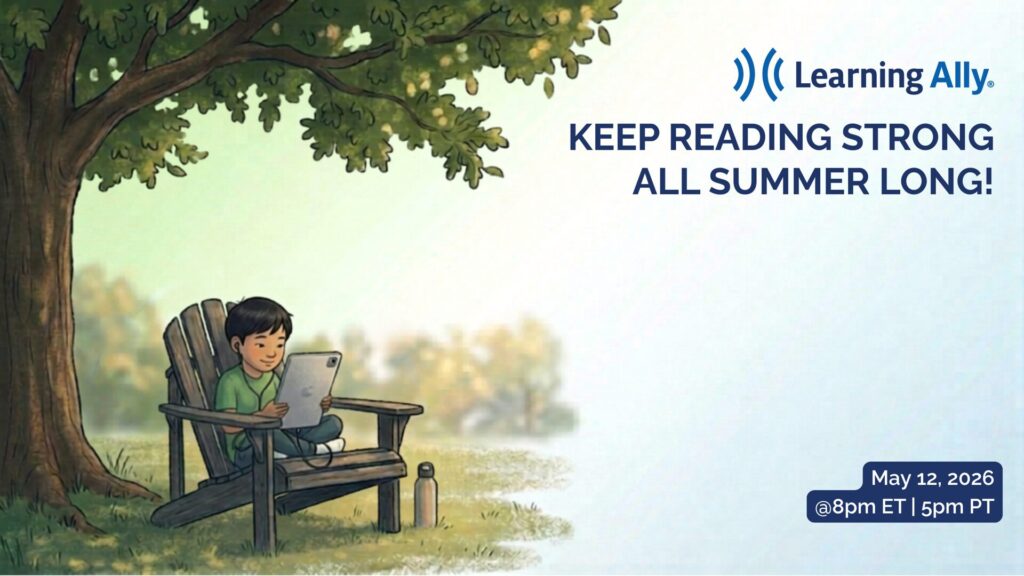
👉 Parents/Caregivers: Register for the On-Demand Summer Reading Parent Event!
Keep Reading Momentum Going This Summer
Summer learning does not have to feel stressful or overwhelming. With accessible books, family support, and engaging reading experiences, students can head into the next school year feeling confident and prepared.
Ready to keep your child reading, learning, and growing all summer long?