
At the heart of bilingual education and dyslexia advocacy lies a shared aspiration: ensuring every student has access to the right resources for literacy success. This was the foundational theme of a recent webinar hosted by Learning Ally, presented by distinguished educators Dr. Martaluz Rodriguez Pozo, Juliette Betancourt, and Nancy Rebarchik Albee.
The Spotlight on Dyslexia (SPOD) Diving Deeper session delved into the complex relationship between language learning and dyslexia, offering educators actionable strategies to identify and support students facing unique challenges in both domains.
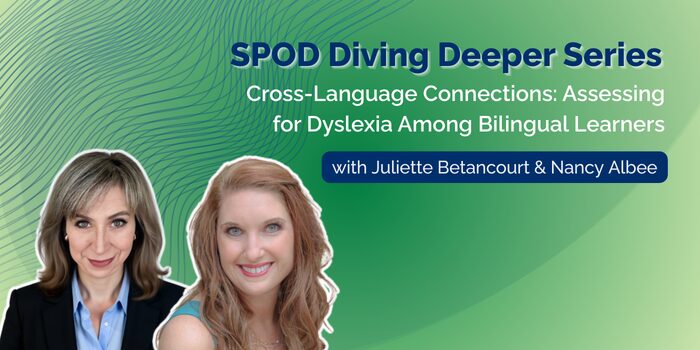
Understanding Dyslexia in Multilingual Contexts
Moderator Dr. Martaluz Rodriguez Pozo emphasized the importance of understanding dyslexia not only in monolingual contexts but also within multilingual populations. As a dyslexic and English Language Learner (ELL) herself, Dr. Pozo brought personal insight to the discussion, focusing on how dyslexia impacts language processing in both native and second languages.
Juliette Betancourt, a certified dyslexia expert, highlighted the critical need for equitable dyslexia identification and instruction for emergent bilingual learners. Her experience underscores the vital role that early identification and effective interventions play in bridging the achievement gap for these students.
Tools for Assessing Dyslexia in Bilingual Students
Educators have numerous tools at their disposal to identify dyslexia in bilingual contexts. Nancy Albee discussed practical strategies to help distinguish between language acquisition challenges and learning disabilities:
- Spelling Tests: Analyzing error patterns across languages.
- Writing Samples: Looking for structural and phonetic consistencies.
- Non-Standard Tests: Using pseudo-words to expose specific decoding difficulties without the context of vocabulary knowledge.
One of the standout resources discussed was the Spanish Language Structure guide. This tool helps educators understand the syllable-structured learning approach—pivotal to reading and writing in Spanish—enabling more targeted and culturally responsive interventions.
Overcoming the “Language Barrier” Myth
The educators addressed a critical issue in the assessment of bilingual students: the misattribution of learning difficulties to language barriers rather than recognizing underlying dyslexia.
By using data-driven techniques and examining a student’s performance in both their native and second languages, educators can make informed decisions about intervention strategies. The presentation also addressed the need for consistency in quality instruction across both regular and dual-language programs, emphasizing that effective teaching must be grounded in the Science of Reading.
👉 Register to watch the full session on-demand.
Supporting Literacy with Audiobooks
The invaluable insights shared during the webinar underscore the significance of giving students access to comprehensive literacy tools. Learning Ally’s Audiobook SolutionⓇ, for example, offers an innovative way for students to engage with grade-level content without the barrier of decoding difficulties.
This tool supports oral and written language development, encouraging students to connect with text fluently and enjoy reading. To learn more about how human-narrated audiobooks can transform the educational experience for dyslexic and bilingual students, educators are encouraged to explore our offerings. We are dedicated to making learning accessible and efficient, empowering students to reach their full potential.
As we continue to explore the intersections of language learning and dyslexia, ensuring access to evidence-based resources remains our guiding principle. Together, we can support every learner’s journey toward literacy success.